
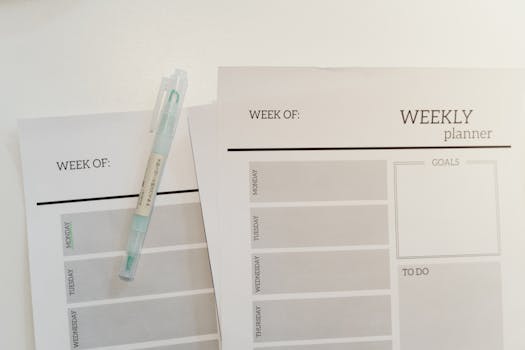

You probably know the feeling: a dozen tasks whirl in your mind, yet progress crawls. Learning to organize weekly goals can immediately lighten that load and boost momentum.
Juggling professional and personal priorities week after week stretches anyone’s focus. Taming the chaos increases reliability, productivity, and the chance to celebrate small wins along the way.
This guide breaks down techniques to organize weekly goals quickly and effectively, showing you the small steps and decisions that add up to real progress, every week.
Gathering Priorities Before Each Week Begins Builds Clarity and Control
Every effective routine to organize weekly goals starts on the weekend, not a frantic Monday morning. A simple pause lets you chart the most important outcomes ahead.
Without this review, the week drifts on auto-pilot. An intentional check-in aligns your to-dos with the priorities you care about, keeping small stuff from filling your calendar.
The “Sunday Snapshot” Technique: What to Ask Yourself
Picture sitting at your kitchen table Sunday afternoon. You say aloud, “Which three results matter most this week?” Write them down right away for instant focus.
Pausing to note three must-do goals helps filter noise. Ensure at least one is personal, not only work-related — think, “Call Dad,” not just “Send project report.”
This snapshot habit lets you organize weekly goals with intention, not by accident. Try this script: “If I finish these three things, the week is a win.”
Forward Planning with a 15-Minute Brain Dump
Set a timer for 15 minutes. List every idea, unfinished task, or obligation lurking in your head. Don’t edit or organize yet — simply empty your mental inbox onto paper.
When the timer buzzes, group tasks by common themes: work, family, personal projects. Prioritize which groups get the most attention in your upcoming week.
This process ensures nothing falls through the cracks as you organize weekly goals. You’ll spot distractions early, and gain space to say “no” to what doesn’t matter.
| Weekend Prep Step | Time Needed | Result | Next Action |
|---|---|---|---|
| Sunday Snapshot | 5 min | Top 3 priorities defined | Place at top of weekly plan |
| Brain Dump | 15 min | All tasks surfaced | Group and categorize |
| Theme Sorting | 10 min | Tasks grouped | Identify big-focus themes |
| Calendar Glance | 5 min | Deadlines visible | Block key times |
| Weekly Commitment | 3 min | Choose one new habit | Write in planner |
Translating Goals into Doable Actions Drives Execution
Once you have your priorities, break big ambitions into tasks so small they feel easy. This tactic guarantees you’ll organize weekly goals with less resistance and clearer progress.
Overwhelming goals stall momentum. Instead, focus on “next visible actions.” For each priority, define a step you’ll see completed this week, not someday.
Using Action Verbs for Clarity
Instead of “finish presentation,” rephrase as, “build slide on market trends.” Clarity comes from action language you’d naturally say out loud while working.
When you organize weekly goals, action verbs turn vague intentions into simple instructions. Write them as if coaching a teammate or prepping your future-self for a busy day.
- Define a task using “Start draft proposal” instead of just “proposal.” This makes jumping in easier, since you know where to begin and what progress looks like.
- Label steps: “Collect Q1 numbers,” not “analyze data.” This tells you exactly which file or folder to open first, saving decision fatigue at the start of work.
- Draft early: “Send outline for review” nudges you to involve others and catch mistakes long before the final deadline, supporting smoother progress on weekly goals.
- Set a call: “Book 1:1 with Alex” signals clear ownership and timing. Specific actions like this help you organize weekly goals with less ambiguity or overlap.
- Review progress: “Check task list Friday” functions as a built-in feedback loop, so you spot unfinished items before the weekend arrives and not afterwards.
Writing tasks as precise actions sharpens your plan. With these habits, you’ll organize weekly goals faster every week.
Grouping Related Tasks for Efficiency
Bunch similar tasks together—like email replies or errands—so you enter a focused flow. This approach is called “batching,” and saves both time and mental effort.
Grouping lets you organize weekly goals with fewer context switches. For example, answer all written messages before lunch, or update several project files in one sitting.
- Bundle admin work into blocks, such as “pay bills and renew subscriptions.” Moving from one admin task to another feels seamless, limiting procrastination.
- Batch phone calls: “Return all voicemails after 3 p.m.” builds in anticipation and lets your brain settle into one communication mode, making execution smoother.
- Handle errands: “Pick up groceries, mail package, fill gas” in one outing. Fewer trips mean less scheduling effort and a streamlined week when you organize weekly goals.
- Review meetings: Check agendas for every meeting the night before. Thinking ahead stops morning surprises and gives your week a calmer start.
- Update digital files all at once—sort, rename, and backup documents during one chunk of time. This improves organization and reduces digital clutter by week’s end.
Like prepping ingredients for a recipe, batching sparks smoother progress on your weekly goals. Less switching means more done, with less stress.
Using Simple Planning Tools Puts Structure to Organize Weekly Goals
Paper, apps, or whiteboards make your weekly plan visible. Choosing a tool you enjoy using creates follow-through and ramps up your ability to organize weekly goals on autopilot.
Every method has trade-offs. Explore which supports your natural rhythms so planning feels satisfying, not like a burdensome chore you want to skip.
Calendar Blocking for Realistic Schedules
Mark each major priority as a block of time, not a vague “to-do.” Seeing a calendar with “write chapter” slotted for Thursday 9–11 a.m. brings structure to the week.
If something only fits as a 15-minute item, note it specifically. This realistic approach to time blocks lets you organize weekly goals with accuracy, reducing overcommitment.
Using color coding for different themes—work, wellness, family—makes your plan visually clearer and keeps balance front and center.
Sticky Notes and Whiteboards for Visual Thinkers
Stick note-sized tasks to your fridge, monitor, or wall. Moving completed notes to a “done” section rewards progress and motivates you to finish the week strong.
A whiteboard lets you map out goals for all to see. Cross each off as you work, and erase on Sunday. Tools like this make organizing weekly goals tactile and tangible.
Don’t let the medium slow you down. Choose portable sticky notes or durable whiteboards based on where you find yourself planning most often: at home, the office, or on-the-go.
Finishing Each Week Strong and Ready for the Next Set of Goals
Tidying up loose ends each Friday brings closure and sets the stage for a more organized start next Monday. This weekly reset celebrates wins while preparing fresh priorities.
Your ability to organize weekly goals compounds over time. Each week builds new habits, sharpens focus, and strengthens your follow-through so planning gets faster — and life runs smoother.
When you finish a week with intention, you train your mind to transition gracefully, notice progress, and return strong for the next round. Make weekly organization a habit worth celebrating.